Phonics for Maths: supporting fluency in the primary classroom
Louise Pennington, Head of Professional Development, OUP
The term Phonics for Maths means different things to different people and has been hotly debated in education circles in recent months. Although originally used as a buzz phrase in the Labour campaign for government, the premise remains an important focus amid curriculum review regardless of how it is referred to.
What does ‘Phonics for Maths’ mean?
Phonics for Maths is not about turning numbers into sounds, but about applying the same structured, foundational approach used in the teaching of early reading, to early maths education. Phonics teaching supports children to decode words by linking letters to sounds in a systematic way. Phonics for Maths therefore aims to do something similar by systematically teaching the building blocks of number sense, from the understanding of quantities and early number relationships to fluency in basic operations.
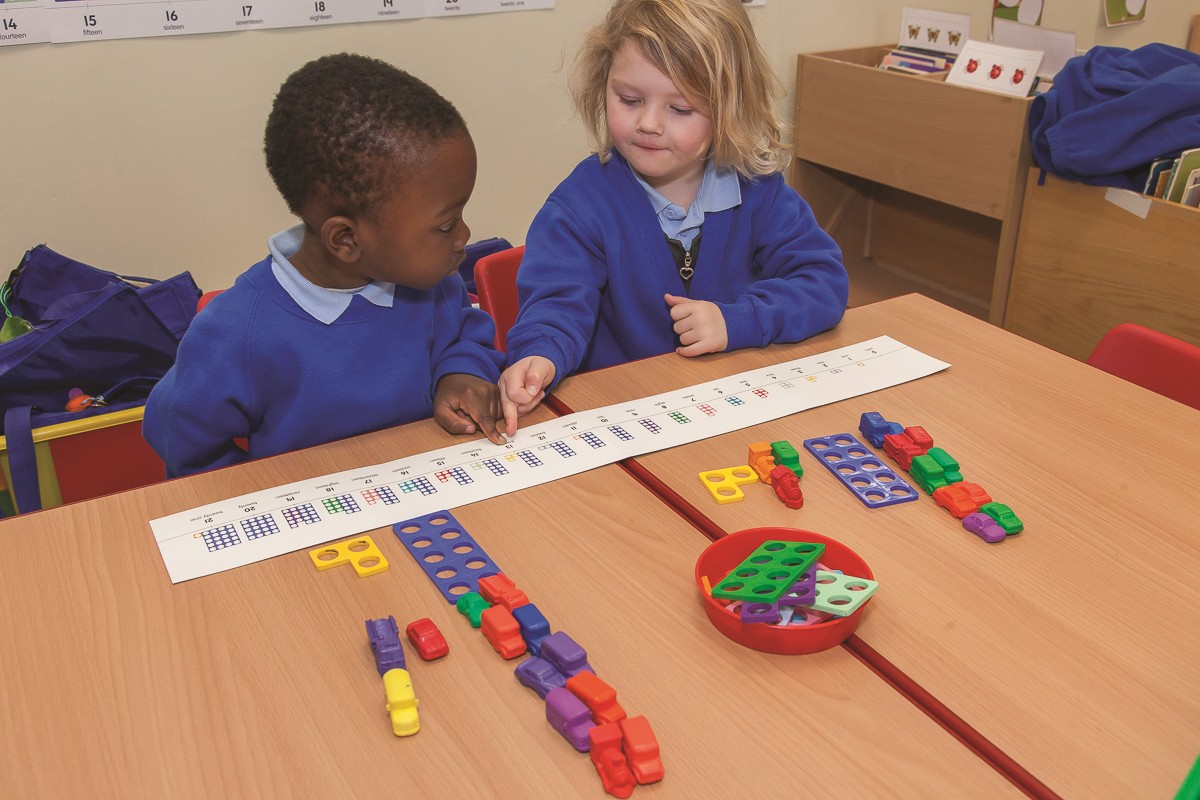
This systematic approach is centred on equity and aims to secure the crucial number facts required to access the mathematical learning all children are entitled to. Most curricula take this to mean addition and subtraction facts up to 20 and multiplication facts (and related division facts) up to twelve times twelve. However, this systematic approach goes beyond factual recall, requiring:
"flexible reasoning and problem-solving skills and the embedding of number sense, conceptual understanding and regular opportunities to apply learning." (Phonics for Maths Benchmarks, OUP 2025)
"By making this a necessary part of developing fluency, we are embedding these higher-order capabilities for wider use in maths and across subject disciplines."
(Phonics for Maths Benchmarks, OUP 2025)
More than automatic recall
It is important to state that fluency is more than automatic fact recall. Automaticity of key facts lightens the cognitive load and helps unlock further derived facts. It frees up the relatively small capacity of an individual’s working memory, so that they can engage in thinking about maths concepts, reasoning and problem solving. Explicit teaching of strategies and practising flexible thinking to derive and apply facts, requires flexible reasoning and problem-solving skills.
How should we teach fluency in Early Years?
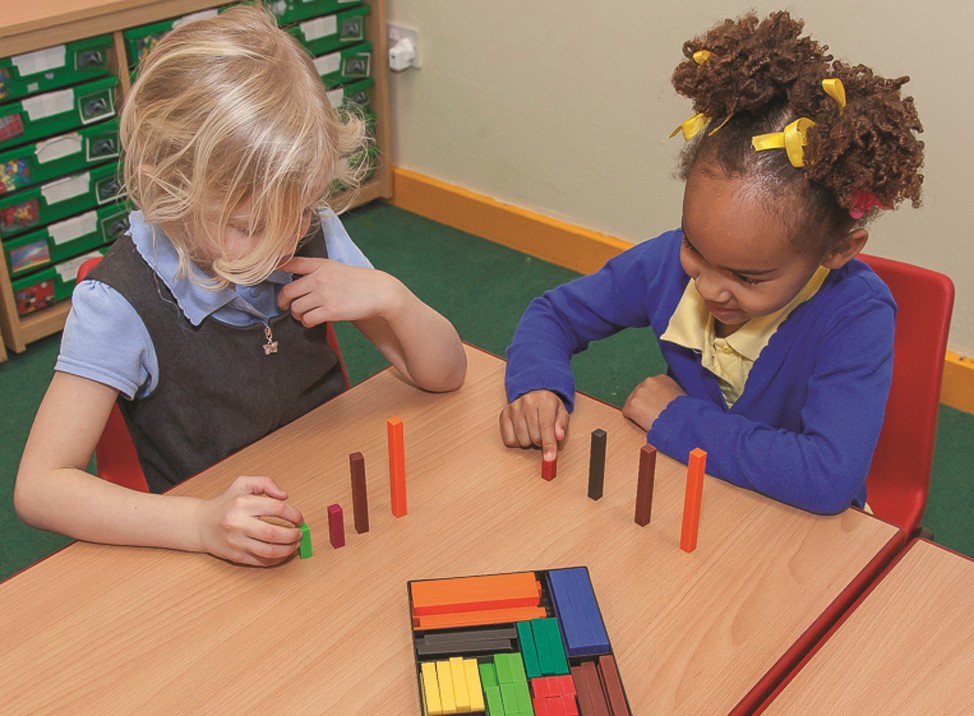
In the early years, a blend of constructivist and direct teaching strategies help provide children with opportunities to discover maths ideas through play, attend to specific maths ideas from guided play opportunities and begin to learn the foundational knowledge through short sessions of explicit teaching. This blend of child led, discovery learning and explicit teaching should also utilise the
C-P-A approach for effective teaching and learning of early number sense.
"High-performing countries make it a priority to ensure that fundamental knowledge is secure. (Maths Horizons, 2025).
Thus, identifying the key building blocks and employing educational approaches to secure these in the early years is crucially important. However, Daniel Ansari reminds us: “that doesn’t mean that is the only thing we need to do, but it is important that we think about maths developmentally. You need these building blocks in place and then, on top of those building blocks, you build increasingly higher-order structures of thinking and reasoning about mathematics.” (Daniel Ansari, TES, Dec 2024)
Once the early number building blocks are in place
If we continue to apply the Phonics for Maths concept to the first few years in primary schools across UK curricula, it will focus on building atop of these early experiences to secure a strong foundation in number sense and fluency, just like phonics does for reading. Further developing this with a focus on multiplication and division through the middle and later years of primary education.
Fluency through cognitive science principles
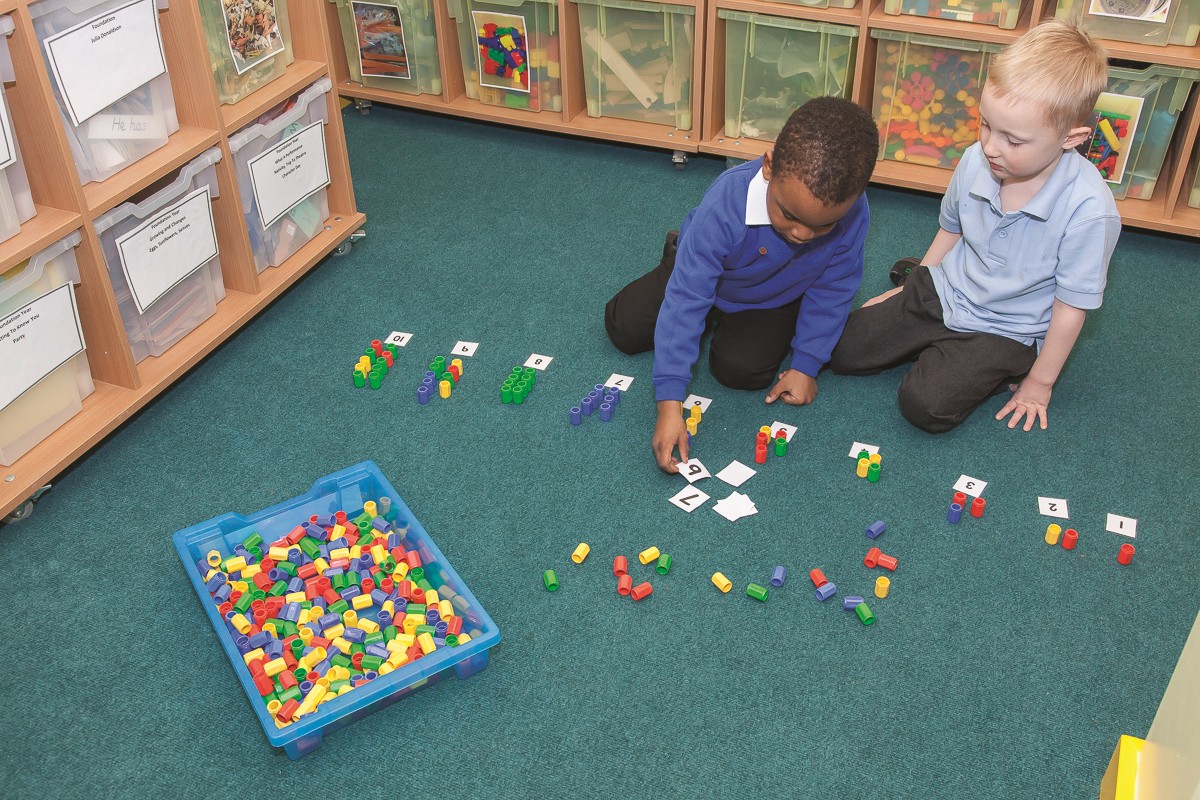
Applying cognitive science principles to a Phonics for Maths approach means designing maths instruction that aligns with how children actually learn and retain information. Being mindful of cognitive load and utilising programmes that have broken the learning down into small manageable chunks will aid successful teaching and learning. A systematic approach to the teaching of facts, while making both the system and strategies explicit, also provides children with a predictable lesson structure, giving them a sense of control over their learning and helping them develop metacognition and motivation through success.
This learning needs to be revisited frequently over time, utilising further cognitive science principles such as spaced and retrieval practice, to support mastery of the fundamental facts and secure fluency.
"To truly teach for mastery, it must be recognised that introducing, developing and securing knowledge is a process that unfolds over time, requiring repeated encounters, varied practice, and opportunities for application and reasoning." (Maths Horizons, 2025)
"By ensuring they experience success through these small, certain building blocks, we can move children away from over-reliance on finger-counting and onto using the strategies successful mathematicians use to make maths easier."
(Phonics for Maths Benchmarks, OUP 2025)
Whole school approach to implementation
For any programme to have real impact, it requires a whole school approach. One that is fully supported by professional development and training. This will secure subject knowledge around the fundamental building blocks, teaching sequencing and pedagogical approaches, and ensure successful implementation. Schools may also need to ensure necessary systems and processes are in place to support this. This might include: "adopting the behaviours that drive implementation; considering the contextual factors that may influence this; and adopting a structured but flexible process that takes these factors into account." (Schools Guide to Effective Implementation, EEF, 2024)
Empowering learners to succeed
Phonics for Maths offers a compelling, research-informed framework for securing both procedural and conceptual fluency in the building blocks of mathematics. Drawing on cognitive science and proven pedagogical strategies, it mirrors the success of phonics in reading by systematically building number sense through explicit instruction, structured practice, and developmental progression.
This approach:
- reduces cognitive load
- fosters metacognition and
- equips pupils with the flexible reasoning skills needed to thrive across the primary curriculum and beyond.
Crucially, it’s not just about fact recall, it’s about empowering learners with the tools to think mathematically. For school leaders, adopting a Phonics for Maths model means investing in a whole-school strategy that prioritises equity, consistency, and mastery. With the right professional development, implementation planning, and curriculum alignment, this approach can transform maths outcomes and close foundational gaps, ensuring every child has the confidence and competence to succeed.
References
- Maths Horizons, (May 2025) How England should reform maths education for the age of AI.
- Ansari, D., (TES, December 2024) What would ‘phonics for maths’ actually look like?
- Education Endowment Foundation (EEF), (2024) A School’s Guide to Effective Implementation.
- Oxford University Press, (September 2025) Fluency and Phonics for Maths Benchmarks
About the author
This article was written by Louise Pennington FCCT, Head of Professional Development at Oxford University Press, and was first published here. Louise started her career as a teacher, became a Special Educational Needs and Disabilities Co-coordinator and Local Authority lead maths and specialist teacher. She later led the Local Authority Special Needs Teaching team supporting teachers, parents, children and young people. Louise has worked for a national not-for-profit organisation that transforms the lives of vulnerable and disadvantaged children and young people, and delivered the National Award for SENCOs as an Associate Tutor for Manchester Metropolitan University.
Explore the Oxford Maths Mastery Framework and download our Fluency and Phonics for Maths Benchmarks.